
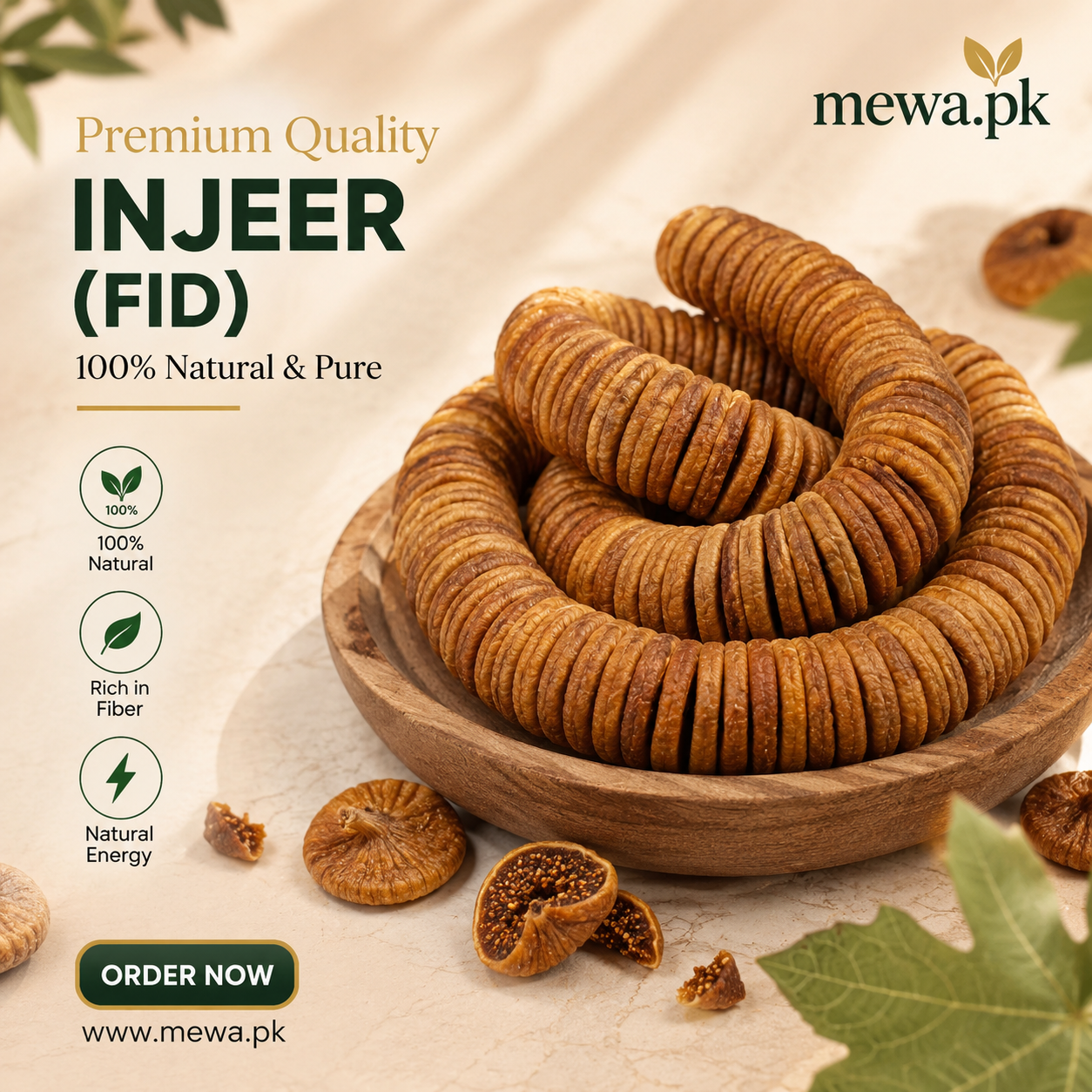
Dried Figs (Anjeer)-figs (anjeer) online in Pakistan| Mewa.pk
Original price was: ₨ 3,500.₨ 2,550Current price is: ₨ 2,550.
Dried figs, known as anjeer in Pakistan, are one of the richest natural sources of calcium, iron, and potassium among all dried fruits. They’re naturally sweet, high in fiber, and completely free from added sugar or artificial preservatives. Whether you’re watching your health or just looking for a smarter snack, Mewa.pk anjeer is a simple upgrade worth making.
What Are Dried Figs (Anjeer)?
Dried figs — called anjeer in Urdu — are the dehydrated form of the fig fruit (Ficus carica). They’ve been eaten across South Asia and the Middle East for thousands of years, both as food and as a traditional remedy. What makes them stand out is their mineral content. Compared to most other dried fruits, dried figs contain higher levels of calcium, potassium, and iron — making them one of the more nutrient-dense snacks you can keep in your pantry.
At Mewa.pk, our dried figs are sourced from mountain farms in Pakistan and sun-dried the traditional way — no sulfur dioxide, no added sugar, and no shortcuts.
Why Choose Mewa.pk Dried Figs (Anjeer)?
There’s a difference between dried figs you find at a general store and what we offer. Here’s what actually sets ours apart:
No added sugar. Figs are naturally sweet. There’s no reason to add sugar — and we don’t. What you taste is the real fruit, nothing else.
No sulfur dioxide (SO₂). Many commercially dried fruits use sulfur dioxide to preserve color and extend shelf life. It can trigger reactions in people sensitive to sulfites. Our figs are preserved naturally, through sun-drying and proper packaging.
Sun-dried using traditional methods. Slow sun-drying preserves the natural texture and concentrates nutrients without using heat processing or chemical sprays. It’s the same method used in the mountains of Pakistan for generations.
Sourced from high-altitude farms in Pakistan. Our figs come from clean, high-altitude growing regions. The cooler climate and clean air produce fruit with better flavor and fewer contaminants than commercially farmed alternatives.
100% natural, vegan, and gluten-free. No additives. No animal byproducts. No gluten. It’s just the fruit — which means almost anyone can eat it.
Nutritional Benefits of Dried Figs:
Most people don’t realize how many minerals are packed into a small handful of dried figs. Here’s a breakdown of what 100g of dried anjeer contains and why it matters:
Calcium:
100g of dried figs contains around 162mg of calcium — that’s more than most other dried fruits. Calcium is essential for bone density, muscle function, and nerve signaling. For people who don’t eat dairy, dried figs are one of the better plant-based sources of this mineral.
Potassium:
Dried figs contain approximately 680mg of potassium per 100g. Potassium helps regulate blood pressure, control heart rate, and balance fluids in the body. Think of it like a natural counter to the effects of a high-sodium diet.
Iron:
With about 2.03mg of iron per 100g, dried figs support healthy red blood cell production. Iron deficiency is one of the most common nutritional deficiencies in Pakistan, especially in women. Eating iron-rich foods like anjeer regularly can help.
Dietary Fiber:
Dried figs are high in dietary fiber — both soluble and insoluble. Soluble fiber feeds beneficial gut bacteria and helps manage blood sugar. Insoluble fiber keeps digestion moving and reduces constipation. Most adults don’t get enough fiber daily, and a small handful of figs helps close that gap.
Antioxidants
Figs contain polyphenols, including chlorogenic acid and flavonoids, which act as antioxidants. These compounds help reduce inflammation and may lower the risk of chronic diseases over time. Dried figs actually have higher antioxidant concentrations than fresh figs because the nutrients become more concentrated during the drying process.
Copper and Manganese
These trace minerals support enzyme activity, immune function, and bone health. They’re not talked about often, but they matter — and dried figs are a reliable source.
Who Should Eat Dried Figs?
People with constipation or digestive issues. The fiber in dried figs acts as a natural stool softener. Eating 2–3 figs soaked overnight can be especially helpful.
Women — especially during pregnancy or menstruation. Figs provide iron, calcium, and folate, all of which are particularly important for women. They’ve been used in traditional Pakistani and Ayurvedic medicine for women’s health for centuries. Always consult your doctor during pregnancy before making dietary changes.
People with high blood pressure. The potassium content in anjeer supports healthy blood pressure levels naturally.
Diabetics — with moderation. Dried figs do contain natural sugars, so portion control matters. But they also have a moderate glycemic index and good fiber content, which slows sugar absorption. A small serving is generally fine, but consult your doctor if you’re managing blood sugar closely.
Athletes and active people. Figs provide quick-release natural sugars for energy, plus potassium and magnesium to reduce muscle cramps. They’re a practical pre- or post-workout snack.
Children. A couple of anjeer a day is a good way to add iron and calcium to a child’s diet — without artificial sweeteners or additives.
Older adults. The calcium and phosphorus content supports bone health, which becomes more important with age.
How to Use Dried Figs
Soak them overnight. This is the most traditional way to eat anjeer. Soak 2–3 figs in water overnight and eat them first thing in the morning. It softens the fruit and makes digestion easier.
Add to oatmeal or porridge. Chop a few dried figs and mix into your morning oats. They add natural sweetness without sugar, plus extra fiber.
Blend into smoothies. Dried figs pair well with banana, milk, or almond milk. Add 1–2 soaked figs to your smoothie for a naturally sweet, nutrient boost.
Eat with nuts as a snack. A handful of Mewa.pk anjeer with almonds or walnuts makes a balanced snack — fiber and natural sugar from the figs, protein and healthy fats from the nuts.
Use in cooking and baking. Chopped dried figs work well in rice dishes, chutneys, energy bars, and baked goods. They add depth and natural sweetness without needing refined sugar.
How to Store Dried Figs
Keep your anjeer in an airtight container, away from direct sunlight and moisture. At room temperature, they stay fresh for 6–8 months. If you live somewhere humid or want to extend shelf life, refrigerate them — they’ll keep for up to a year. Don’t store them in plastic bags that aren’t sealed, as moisture will cause them to harden or develop mold. Once you open your Mewa.pk pack, transfer to a glass jar or resealable container for best results.
5. FAQ SECTION (AEO Optimized)
What are dried figs (anjeer) and how are they made?
Dried figs are fresh figs that have been dehydrated — either by sun-drying or machine drying — to remove most of their moisture. At Mewa.pk, we use the traditional sun-drying method with no added chemicals. The result is a chewy, naturally sweet fruit with a concentrated nutrient profile. They’re the same figs you know, just preserved without anything artificial.
What are the health benefits of eating dried figs daily?
Eating dried figs regularly supports digestion, bone health, and blood pressure. They’re rich in dietary fiber, calcium (162mg per 100g), potassium (680mg per 100g), and iron (2.03mg per 100g). These nutrients work together to support heart function, bone density, and healthy digestion. Two to three figs a day is a reasonable daily amount for most adults.
Can diabetics eat dried anjeer (figs)?
Diabetics can eat dried figs in small portions, but moderation is important. Dried figs contain natural sugars, but they also have dietary fiber that slows glucose absorption. A serving of 1–2 figs as part of a balanced meal is generally considered low-risk. That said, everyone’s blood sugar response is different — consult your doctor for personalized advice.
Are dried figs better than raisins nutritionally?
Dried figs generally have higher calcium, potassium, and fiber content than raisins. Raisins are higher in sugar and calories per gram. Figs also contain more diverse minerals, including copper, manganese, and selenium. For people focused on bone health or mineral intake, figs are the stronger choice. Both are healthy in moderation — it comes down to what your body needs more of.
How long do dried figs last and how should I store them?
Dried figs last 6–8 months at room temperature in an airtight container. Refrigerated, they can stay fresh for up to 12 months. Always keep them away from moisture and direct sunlight. Once opened, transfer to a glass jar with a tight lid to prevent them from hardening or absorbing odors from other foods.
Where can I buy natural dried figs (anjeer) in Pakistan?
You can buy 100% natural, no-sugar dried figs online in Pakistan from Mewa.pk. Mewa.pk sources its anjeer from mountain farms in Pakistan and uses no sulfur dioxide, no artificial preservatives, and no added sugar. Orders are delivered across Pakistan. Visit Mewa.pk to place your order.
| Weight | 0.5 kg |
|---|
Related products
-
Walnut Oil: Walnut Oil Benefits for Skin
Original price was: ₨ 5,650.₨ 5,200Current price is: ₨ 5,200. -
Buy Organic Sea Buckthorn Powder in Pakistan – Powerful Superfood for Skin, Immunity & Energy
Original price was: ₨ 1,500.₨ 1,200Current price is: ₨ 1,200. -
Walnut Kilao | kilao price in Pakistan
Original price was: ₨ 2,500.₨ 2,000Current price is: ₨ 2,000.









 Home
Home  Whishlist
  Checkout
  Account