Khobani Giri – Dried Apricot Kernels |Buy natural khobani giri (apricot kernels) online in Pakistan- Mewa.pk
Original price was: ₨ 2,600.₨ 2,200Current price is: ₨ 2,200.
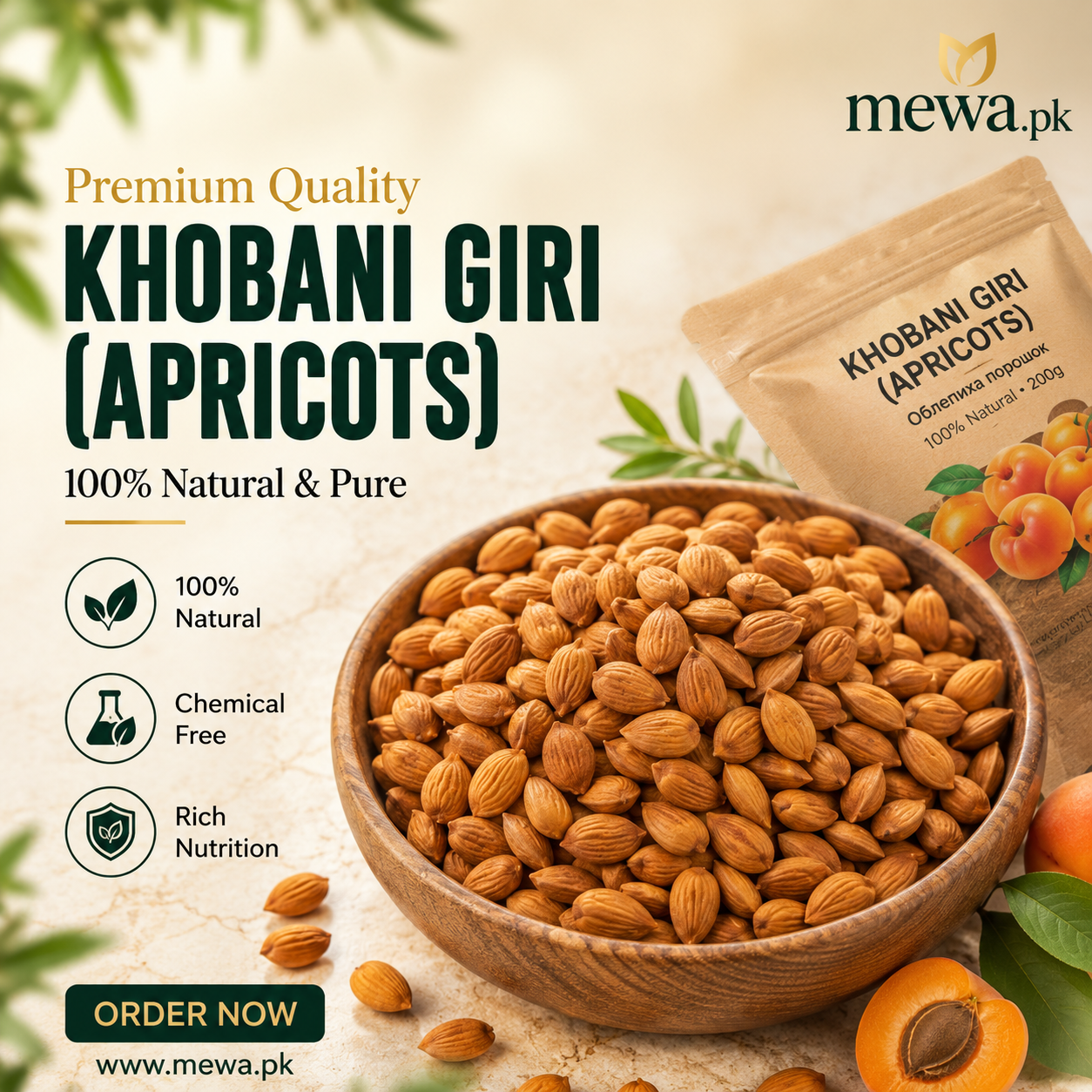
Khobani giri or apricot kernels are the small edible seeds found inside dried apricot stones. They have a mild, nutty taste and are a traditional snack in the Hunza and Gilgit-Baltistan region. Mewa.pk’s khobani giri is sun-dried the traditional way, with no added sugar or preservatives — great for anyone who enjoys nuts and seeds as a natural snack.
. FULL PRODUCT DESCRIPTION:
What Is Khobani Giri?
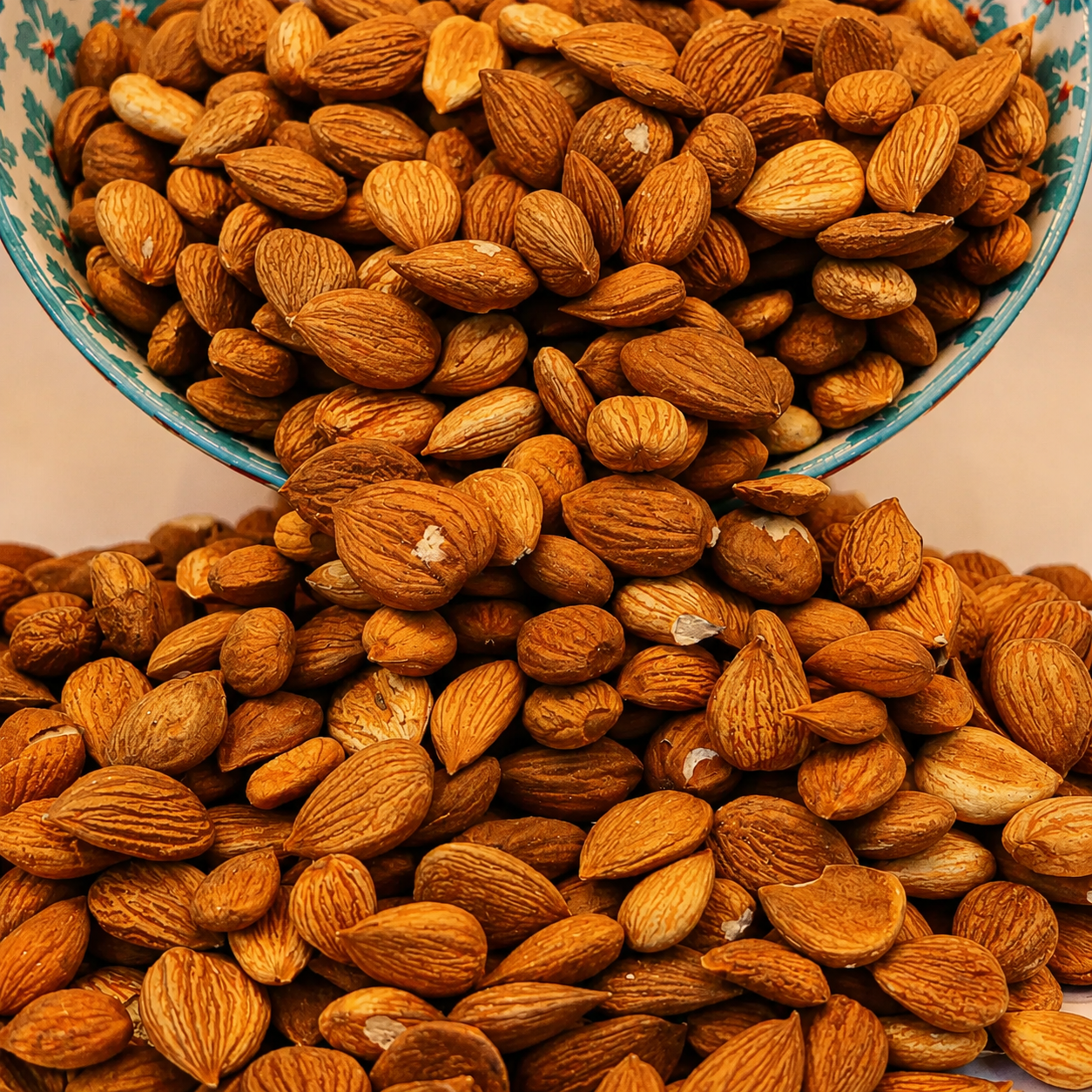
Khobani giri is the kernel found inside the hard shell of a dried apricot seed. In English, it’s usually called apricot kernel. People in Gilgit-Baltistan have eaten these for generations — they crack open the apricot stone after drying, and inside is this small, almond-like kernel. It’s not the same as dried apricot fruit. Think of it more like a cousin of the almond, but with its own distinct flavor.
Why Choose Mewa.pk Khobani Giri?
Sourced from Gilgit-Baltistan. Our kernels come from apricot orchards in the mountain valleys of Gilgit-Baltistan, where apricots have been grown for centuries. This isn’t imported stock — it’s local.
Sun-dried, not machine-processed. We dry the kernels using the traditional sun-drying method. No shortcuts, no chemical drying agents.
No added sugar. What you get is the kernel as it is. We don’t coat it in sugar or syrup like some packaged snacks do.
No sulfur dioxide, no preservatives. A lot of dried fruit and nut products use sulfur dioxide to keep color and extend shelf life. We don’t use it. This means the color and taste stay natural, and you’re not eating an added chemical.
Farm to table. There’s no long middleman chain here. The kernels go from the farms in the mountains to our packing, then straight to you.
Nutritional Benefits:
Apricot kernels are small, but they carry a decent nutritional punch. Here’s what a standard 28g (1 ounce) serving roughly gives you:
Protein:
Around 5 to 6 grams of protein per 28g serving. That’s close to what you’d get from a similar serving of almonds, which makes khobani giri a reasonable plant-based protein snack.
Healthy Fats:
About 4 to 5 grams of fat per serving, mostly unsaturated. These are the same type of “good fats” found in olive oil and other nuts, which are generally better for heart health than saturated fats.
Vitamin E:
Apricot kernels contain a meaningful amount of vitamin E, an antioxidant that helps protect your cells from oxidative stress.
Fiber:
Roughly 1 to 2 grams of fiber per serving. It’s not a huge amount, but every bit adds to your daily fiber intake.
Magnesium and Calcium:
Kernels also contain small amounts of magnesium and calcium, both of which support bone and muscle function.
A note on moderation: Apricot kernels, especially the bitter variety, naturally contain a compound called amygdalin. In large amounts, this can be harmful. This is why apricot kernels should be eaten in small, moderate quantities — not by the handful every day. If you have a medical condition, are pregnant, or are unsure how much is safe for you, please talk to a doctor before adding them to your daily diet.
Who Should Eat Khobani Giri?
Snackers looking for something different. If you’re tired of the usual almonds and cashews, khobani giri offers a different taste and texture.
Vegans and vegetarians. As a plant-based source of protein and healthy fat, it fits well into a vegan diet.
People who prefer natural, unprocessed snacks. Since there’s no added sugar or preservatives, it suits anyone trying to cut down on processed food.
Traditional food enthusiasts. If you’re interested in regional Pakistani food culture, khobani giri is a genuine part of Hunza and Gilgit-Baltistan’s food heritage.
Note: Because of the amygdalin content mentioned above, khobani giri is not recommended in large quantities for children, pregnant women, or anyone with liver conditions, without first checking with a doctor.
How to Use Khobani Giri:
As a light snack. A small handful (around 8-10 kernels) makes a satisfying between-meal snack.
Mixed with other dried fruits. Combine it with dried apricots, mulberries, or walnuts for a homemade trail mix.
Crushed over desserts. Lightly crush a few kernels and sprinkle them over kheer, yogurt, or ice cream for a nutty crunch.
In traditional Hunza recipes. In Gilgit-Baltistan, khobani giri is sometimes used in local dishes and sweets — worth trying if you enjoy regional cooking.
Roasted, for extra flavor. Lightly roasting the kernels brings out a deeper, toastier taste compared to eating them raw.
How to Store Khobani Giri:
Keep khobani giri in an airtight container, away from direct sunlight and moisture. A cool, dry place like a kitchen cabinet works well. Since there are no preservatives added, proper storage matters more than usual — it keeps the kernels fresh and prevents them from turning rancid. Once opened, try to finish the pack within a few months for the best taste.
5. FAQ SECTION:
What is khobani giri?
Khobani giri is the edible kernel found inside a dried apricot seed. It’s often called apricot kernel in English. People in Gilgit-Baltistan and Hunza have traditionally eaten it as a snack for generations, either raw or lightly roasted.
Is khobani giri good for health?
Yes, in moderate amounts, khobani giri offers protein, healthy unsaturated fats, and vitamin E. A 28g serving has roughly 5 to 6 grams of protein and small amounts of fiber and magnesium. However, it should be eaten in small quantities due to naturally occurring compounds in the kernel.
Is khobani giri safe for diabetics?
Khobani giri has no added sugar, which is a plus for diabetics. It’s mostly protein and fat, so it doesn’t cause the same blood sugar spike as sugary snacks. That said, portion size matters, and diabetics should consult their doctor before adding any new food to their routine.
What’s the difference between khobani giri and dried apricots?
Khobani giri is the kernel inside the apricot seed, while dried apricots are the dried flesh of the fruit itself. They come from the same apricot but are completely different parts — different taste, different texture, and different nutrition profile.
How long does khobani giri stay fresh?
When stored in an airtight container in a cool, dry place, khobani giri typically stays fresh for several months. Since Mewa.pk doesn’t add preservatives, proper storage away from heat and moisture is important to maintain freshness.
Where can I buy khobani giri in Pakistan?
You can buy authentic, sun-dried khobani giri online from Mewa.pk. It’s sourced directly from Gilgit-Baltistan, with no added sugar or preservatives, and delivered across Pakistan.
| Weight | 1 kg |
|---|
Related products
-
Walnut Kilao | kilao price in Pakistan
Original price was: ₨ 2,500.₨ 2,000Current price is: ₨ 2,000. -
Walnut Oil: Walnut Oil Benefits for Skin
Original price was: ₨ 5,650.₨ 5,200Current price is: ₨ 5,200. -
Organic Kishmish Online in Pakistan | Natural Kishmish Pure – Mewa.pk
Original price was: ₨ 2,000.₨ 1,500Current price is: ₨ 1,500.






 Home
Home  Whishlist
  Checkout
  Account