
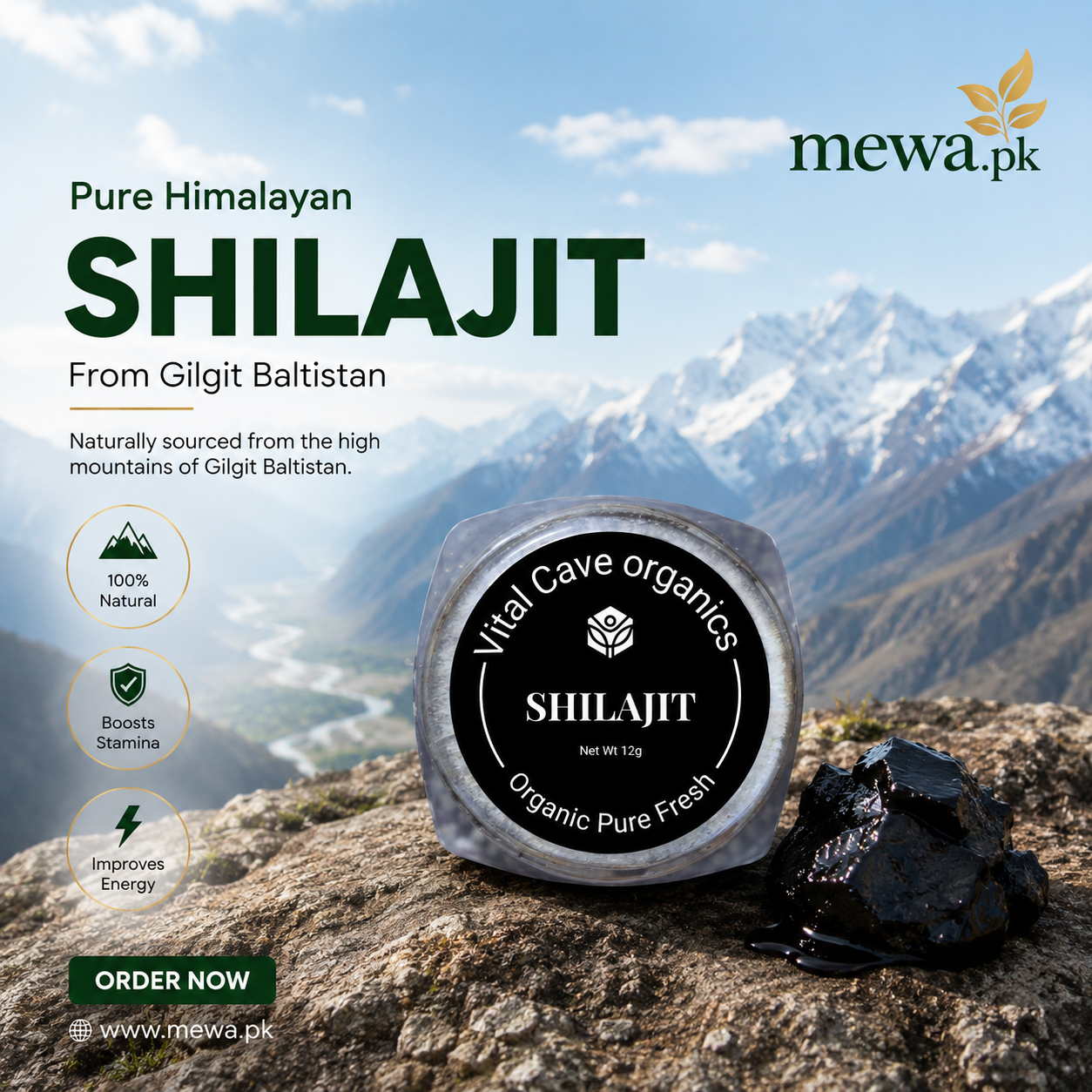
Buy pure Shilajit resin online in Pakistan| Boosts energy, stamina and focus naturally-Order from Mewa.pk
Original price was: ₨ 1,500.₨ 999Current price is: ₨ 999.
Shilajit is a natural mineral resin found deep in the rocks of high-altitude mountain ranges like the Himalayas and Karakoram. It’s been used for centuries to support energy, physical strength, and mental clarity. If you’re dealing with fatigue, low stamina, or just want a natural daily supplement — this is worth knowing about.
What Is Shilajit?
Shilajit is a sticky, tar-like resin that forms over hundreds of years as plant matter slowly breaks down inside mountain rocks. It seeps out from cracks in high-altitude cliffs — mostly above 3,000 meters — in places like Gilgit-Baltistan, the Himalayas, and the Karakoram range. This makes it one of the rarest naturally occurring substances you can find in Pakistan.
It’s not a herb. It’s not a plant extract. Think of it like a mineral concentrate — built up slowly over centuries from organic material compressed inside rock. The result is something unusually dense in bioactive compounds, including over 80 trace minerals and a key compound called fulvic acid.
Why Choose Mewa.pk Shilajit?
Most Shilajit sold in Pakistan is either processed with fillers, diluted with wax or resin blends, or sourced from unknown regions. That’s a real problem — because purity is everything with this product.
Here’s what makes Mewa.pk’s Shilajit different:
Sourced from high-altitude Pakistani mountains
Our Shilajit comes from the rocky cliffs of Gilgit-Baltistan — the same region where this resin has been collected traditionally for generations. Altitude matters. Higher altitude means less pollution, better mineral density, and purer resin.
No fillers, no artificial additives
What’s in the jar is just Shilajit. No wax blends, no synthetic compounds, no preservatives. You’re getting the resin as close to its natural form as possible.
Naturally rich in fulvic acid
Fulvic acid is the main active compound in Shilajit. It helps your body absorb other nutrients more efficiently — including iron, zinc, and magnesium. Without adequate fulvic acid, you get far less benefit from the resin.
Traditional collection method
This isn’t factory-extracted. It’s collected by hand from mountain rock faces, then purified carefully to remove debris without stripping its natural compounds.
Tested for heavy metals
Mountain resins can contain naturally occurring heavy metals. Mewa.pk Shilajit is tested to ensure it’s safe to consume — something most sellers in Pakistan don’t bother mentioning.
Nutritional Benefits
Shilajit isn’t like a fruit or vegetable where you can list “X grams of protein per serving.” Its value comes from bioactive compounds and trace minerals rather than macronutrients. Here’s what the research actually shows:
Fulvic Acid
Shilajit is one of the richest natural sources of fulvic acid. This compound acts as a carrier — it helps your cells absorb minerals and nutrients more efficiently. Some studies suggest it also has antioxidant properties that help reduce oxidative stress in the body.
Trace Minerals
Authentic Shilajit contains over 80 trace minerals in ionic form, including zinc, magnesium, iron, copper, and manganese. These aren’t added — they’re naturally occurring from the rock and plant material it formed from.
Dibenzo-alpha-pyrones (DBPs)
These are mitochondria-supporting compounds found in Shilajit. Mitochondria are the energy-producing units in your cells. Some research suggests DBPs help support mitochondrial function, which is partly why Shilajit has a reputation for improving energy levels.
Testosterone Support
A clinical study published in Andrologia (2015) found that men taking purified Shilajit for 90 days showed a statistically significant increase in total testosterone and free testosterone compared to a placebo group. The dose used was 250mg twice daily.
Cognitive Support
Animal and early human studies suggest fulvic acid may inhibit the aggregation of tau proteins — proteins that, when they clump together abnormally, are linked to cognitive decline. This research is still early-stage, but it’s why Shilajit is increasingly studied in the context of brain health.
Who Should Use Shilajit?
Men dealing with low energy or fatigue
If you wake up tired, hit a wall by mid-afternoon, or notice a decline in stamina — Shilajit is one of the more studied natural options for energy at the cellular level.
Athletes and physically active people
Shilajit may help with post-workout recovery by supporting cellular energy production and reducing oxidative stress caused by intense exercise.
People over 40
Testosterone, energy, and cognitive sharpness naturally decline with age. Shilajit doesn’t replace medical treatment — but it’s a well-researched natural supplement for those looking to support these areas.
People with iron deficiency
Fulvic acid in Shilajit has been shown to improve iron absorption. If you’re taking iron supplements but struggling to maintain good levels, Shilajit may support better absorption.
Those seeking a natural daily supplement
If you want to avoid synthetic supplements and prefer something derived directly from nature, Shilajit is one of the oldest documented health substances in Ayurvedic and traditional Pakistani/Desi medicine.
Important: If you have a medical condition, are on medications, or are pregnant or breastfeeding — consult your doctor before using Shilajit.
How to Use Shilajit
The basic daily dose
Take a pea-sized amount (roughly 300–500mg) and dissolve it in warm water, milk, or green tea. Don’t use boiling water — very high heat can degrade some of its active compounds. Warm is fine.
With warm milk at night
This is the most traditional way to take it. Dissolve a small amount in warm (not boiling) milk before bed. Many people find this helps with sleep quality and waking up more refreshed.
In your morning tea or coffee
If you prefer a morning routine, dissolve it in warm tea or black coffee. The slight bitter taste of Shilajit actually blends reasonably well with tea.
Stacked with zinc or ashwagandha
Shilajit is often taken alongside zinc or ashwagandha for added testosterone and energy support. These are generally considered safe to combine — but again, check with a doctor if you’re unsure.
Consistency matters more than dose
This isn’t something that gives you a caffeine-like hit the same day. Most people who report benefits are taking it consistently for 4–8 weeks. Start with a small dose and increase gradually.
How to Store Shilajit
Keep the jar tightly closed and store it somewhere cool and dry, away from direct sunlight. A kitchen cupboard or drawer works fine. You don’t need to refrigerate it — in fact, cold temperatures can make the resin very hard and difficult to use. If it becomes too soft in summer, just pop it in the fridge briefly before use. Shilajit has a long natural shelf life when stored properly — usually 2–3 years.
5. FAQ SECTION:
What is Shilajit and where does it come from?
Shilajit is a natural mineral resin that forms inside high-altitude mountain rocks over hundreds of years. It’s found primarily in the Himalayas, Karakoram, and Hindukush ranges — including Gilgit-Baltistan in Pakistan. It forms as plant and organic matter slowly decomposes and gets compressed inside rock, eventually seeping out as a thick, tar-like resin.
What does Shilajit actually do for your body?
Shilajit’s main benefits come from fulvic acid and trace minerals, which support energy production, nutrient absorption, and cellular health. Research has shown potential benefits for testosterone levels, physical stamina, and cognitive function. A 2015 clinical study found that 500mg of purified Shilajit daily significantly increased testosterone in healthy men over 90 days.
Is Shilajit safe for people with diabetes?
Shilajit itself contains no sugar, but people with diabetes should consult their doctor before using it. Some early research suggests Shilajit may influence blood glucose metabolism, which could interact with diabetes medications. It’s not a diabetic-specific supplement, and medical advice is important before adding it to any diabetes management routine.
How is Shilajit different from regular supplements or vitamins?
Most supplements contain isolated, lab-synthesised vitamins or minerals. Shilajit is a whole-food resin containing over 80 naturally occurring trace minerals plus fulvic acid in their natural ionic form. The fulvic acid also improves the bioavailability of other minerals in your body — meaning it helps your body actually use what you’re consuming, not just pass it through.
How long does Shilajit last and how should I store it?
Properly stored Shilajit has a shelf life of 2–3 years. Keep the jar sealed tightly, away from direct sunlight and moisture, at room temperature. Don’t refrigerate it unless it’s getting very soft in extreme heat — cold temperatures make it very hard and difficult to use. Never leave the lid off for extended periods.
Where can I buy genuine Shilajit in Pakistan?
You can buy genuine, high-altitude sourced Shilajit from Mewa.pk — a Pakistani brand sourcing directly from Gilgit-Baltistan and mountain regions of Pakistan. Mewa.pk sells it without fillers, additives, or artificial ingredients. Ordering online through Mewa.pk ensures you get a product that’s traceable to its source.
Related products
-
Apricot Kernels (Khubani Giri)| Apricot kernels Pakistan-Mewa.pk
Original price was: ₨ 3,000.₨ 2,300Current price is: ₨ 2,300. -
Sea Buckthorn Jam / sea Buckthorn benefits
Original price was: ₨ 2,000.₨ 1,600Current price is: ₨ 1,600. -
Buy Fresh Anjeer Online in Pakistan – Pure Dried Figs | Mewa.pk
Original price was: ₨ 3,900.₨ 3,200Current price is: ₨ 3,200.








 Home
Home  Whishlist
  Checkout
  Account