
Badam (Almonds) – Giri, No Preservatives, Mountain Fresh | Mewa.pk
Original price was: ₨ 3,200.₨ 2,700Current price is: ₨ 2,700.
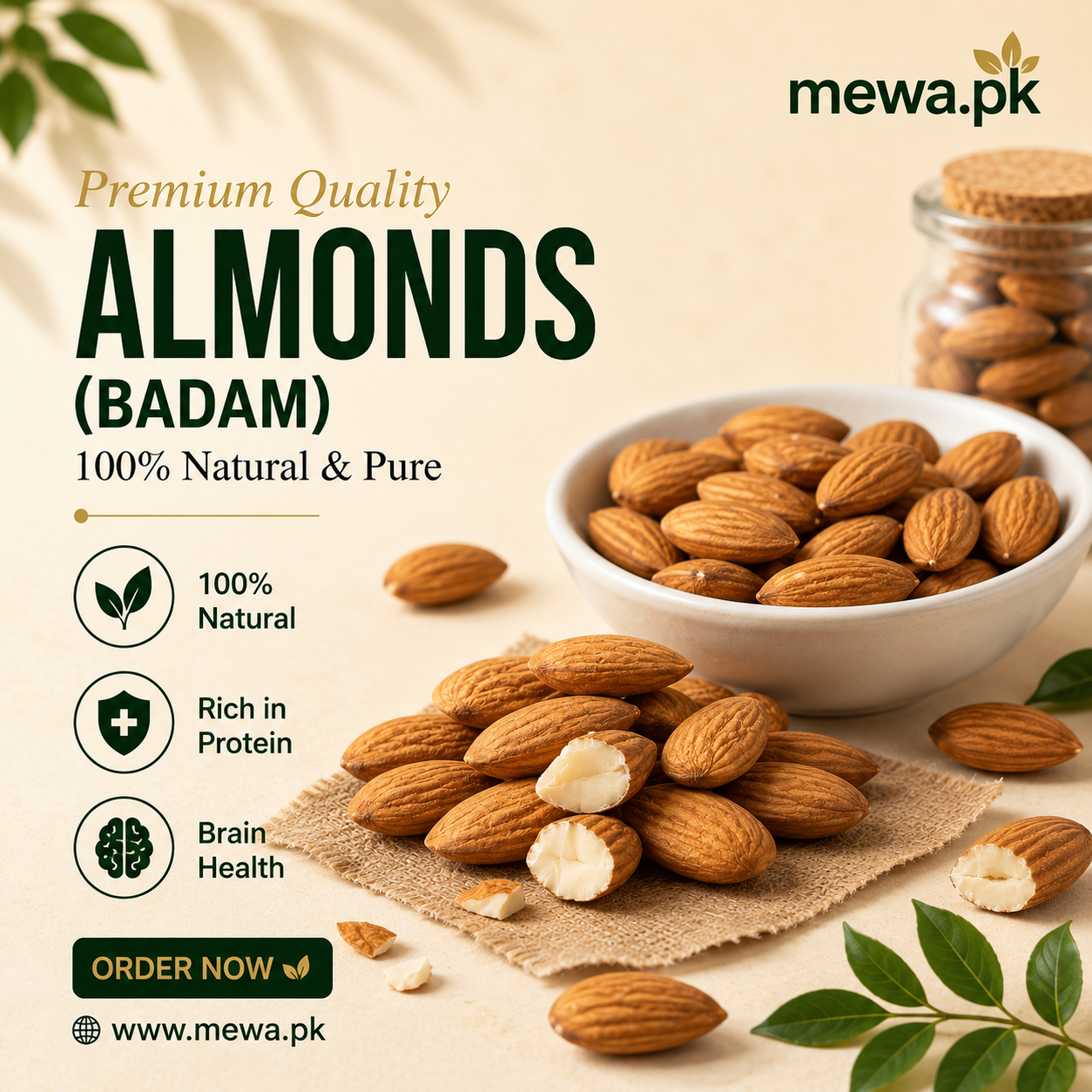
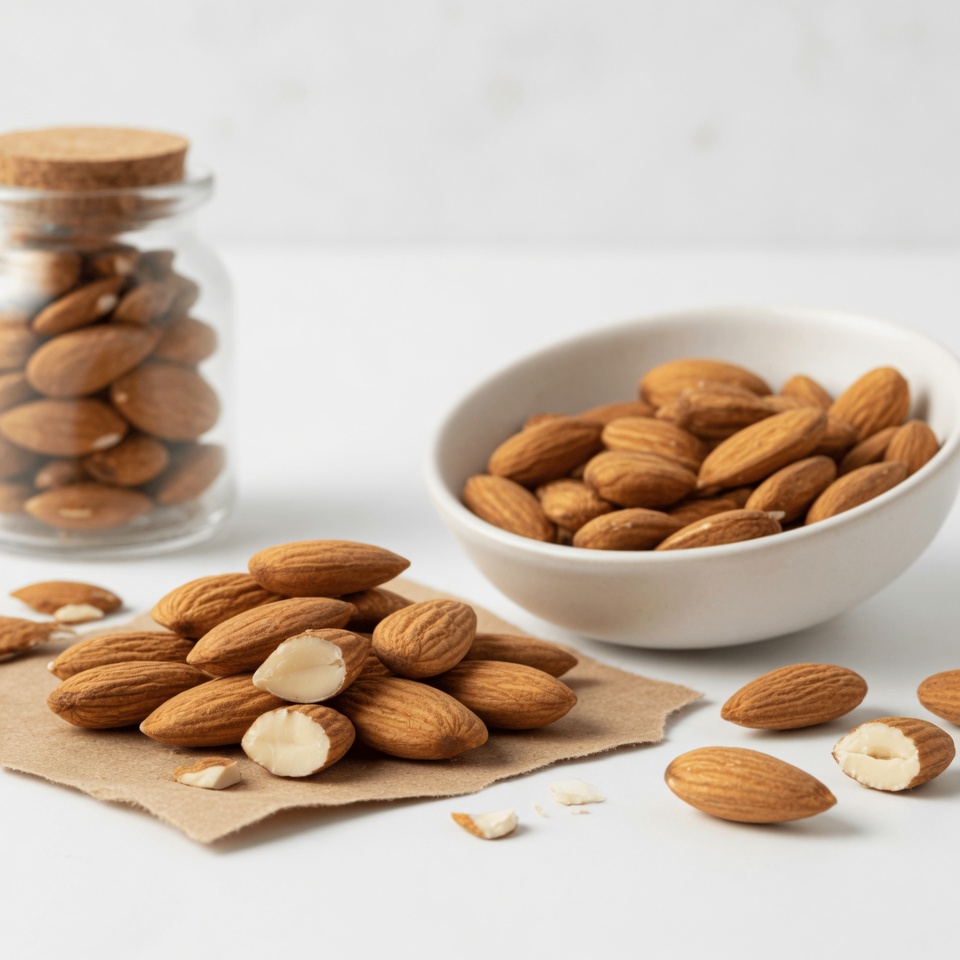
Most badam you find in stores has been oil-roasted, salted, or sitting in a warehouse for months. Ours haven’t. Mewa.pk Badam are raw, unprocessed almonds sourced from the mountain farms of Gilgit-Baltistan — picked, dried, and sent directly to you. No roasting oils, no added salt, no preservatives. Just the nut, as it comes off the tree. One 28g handful gives you 6g of protein, 7.3mg of Vitamin E, and 76mg of magnesium — more than almost any other nut you’ll eat today.
What Makes Mewa.pk Badam Different From What You Usually Buy?
Here’s something most people don’t think about: the badam sold at your local kiryana or even in a supermarket has usually been oil-roasted, treated with salt, and packed months before you buy it. Some imported varieties travel thousands of kilometres and sit in cold storage before reaching your hands.
Mewa.pk badam are different. These are raw, whole almonds sourced from Gilgit-Baltistan and the northern mountain belt of Pakistan — regions where almonds grow slowly in clean, high-altitude air and develop naturally higher oil content than flat-land varieties. Gilgit-Baltistan almonds are smaller in size compared to Californian almonds but have higher oil content — around 42% — which is actually what gives them that richer, more intense flavour. Nothing added. Nothing processed. Straight from the farm.
Why Choose Raw Almonds Over Roasted Ones?
Roasting changes almonds. The heat reduces levels of heat-sensitive nutrients like Vitamin E and certain B vitamins. Oil-roasting adds extra fat that wasn’t part of the original nut. And when salt is added, people with blood pressure issues have one more reason to worry.
Raw almonds keep everything intact. Almonds are the tree nut highest in Vitamin E, fiber, calcium, and riboflavin compared ounce for ounce with Brazil nuts, hazelnuts, pecans, pine nuts, walnuts, cashews, macadamias and pistachios. And that’s before any processing. Roasting takes some of that away. Raw keeps it.
This is why Mewa.pk sells raw badam. Not roasted, not salted, not flavoured. Just the real thing.
Nutrition — What You Actually Get Per Handful
A 28g serving of raw almonds — roughly 23 pieces, or one small handful — gives you:
Vitamin E — the one people underestimate
One handful of almonds covers roughly half your daily Vitamin E requirement. The natural form of Vitamin E in almonds is d-alpha-tocopherol — which is more potent than the synthetic forms found in most dietary supplements. It protects your cells from damage and supports skin and immune health. Most Pakistanis don’t get enough Vitamin E from their daily diet. A handful of badam fixes that.
Magnesium — the quiet one doing a lot of work
76mg of magnesium per handful. Magnesium handles nerve and muscle function, keeps blood sugar and blood pressure steady, and helps the body produce protein, energy, bone, and DNA. Most people are low on magnesium without knowing it — and almonds are one of the easiest food sources to fix that gap.
Protein — not just for gym people
One 28g handful of almonds provides 6 grams of protein — and if you scale to 100g, that’s 21 grams of protein, comparable to eggs, chicken, and Greek yoghurt. For vegetarians, vegans, or anyone just trying to eat less processed food, badam is one of the most practical protein sources available.
Heart fats, not the bad kind
Regular almond intake has been shown to improve lipid profiles by reducing LDL cholesterol and improving HDL functionality. The 13g of fat per handful is almost entirely unsaturated — the type your heart actually benefits from.
Who Should Eat Badam — and How Much?
- Students and working adults: Almonds contain riboflavin and nutrients linked to brain function and memory. A handful before studying or a long meeting is more useful than caffeine.
- People with diabetes: Almonds contain magnesium, and older research suggests magnesium may be linked to reductions in insulin resistance in people with and without diabetes. Portion size still matters — consult your doctor.
- Pregnant women: Folate, iron, and calcium in almonds support healthy fetal development. Always check with your doctor first.
- Athletes and active people: 6g protein and 76mg magnesium per handful helps with muscle recovery and reduces cramping.
- Vegetarians and vegans: One of the most complete plant-based protein and fat sources in a single food.
- Kids: Easy to carry, naturally filling, no sugar spike. Better than biscuits for school tiffin — but check for nut allergies first.
- People trying to manage weight: A 2024 analysis of 37 trials found that daily consumption of 50g of almonds for at least 12 weeks may reduce hunger and improve body composition measures like weight and waist circumference.
How much? Most research points to 28–40g per day (about 23–30 almonds) as a practical daily amount. More than that and the calorie count adds up fast.
Five Ways to Use Badam in Pakistan
- Soak overnight, eat in the morning. This is the most common way Pakistani households eat badam. Soaking softens the skin, and removing the skin before eating is believed to make almonds easier to digest and may increase nutrient absorption. Peel the skin off after soaking — it comes off in seconds.
- Add to doodh (milk) at night. 5–6 soaked almonds blended with warm milk and a pinch of saffron is a long-standing desi remedy for sleep, focus, and energy — and it actually tastes good.
- Use in halwa, zarda, or sheer khurma. Badam is a core ingredient in Pakistan’s traditional desserts. Ours are clean and raw, so they won’t add any roasting oil flavour to your recipe.
- Eat as a mid-day snack. A small handful at 11am or 3pm keeps hunger in check until your next meal. It’s 160 calories of protein and fat — more filling than a packet of chips.
- Grind into almond flour or paste. Use in baking, smoothies, or as a base for homemade almond chutney. Raw almonds grind better than roasted ones.
How to Store Badam
Raw almonds have natural Vitamin E which acts as a mild preservative. In an airtight container at room temperature, they stay fresh for 4–6 months. In the fridge, they last up to a year. Keep them away from heat and moisture — a warm kitchen shelf will make them go rancid faster. Never store in a plastic bag that isn’t sealed. The smell test works: if they smell sharp or sour, they’ve turned.
### What is the difference between raw almonds and roasted almonds?
Raw almonds are unprocessed, while roasted almonds have been heated — sometimes in oil, sometimes dry-roasted. Roasting reduces heat-sensitive nutrients like Vitamin E and some B vitamins. Oil-roasted almonds also contain added fat from the roasting oil. Raw almonds retain their full nutritional profile and contain no added ingredients. For maximum nutrition, raw almonds are the better choice.
### Are almonds (badam) good for brain health?
Yes, almonds contain several nutrients that support brain function. They are rich in Vitamin E (7.3mg per 28g), which has been linked to slowing cognitive decline in adults. They also contain riboflavin and L-carnitine, nutrients associated with neurological activity. In South Asian tradition, soaked badam has long been recommended for memory and focus — and the nutritional science supports at least part of that.
### How many almonds should I eat per day in Pakistan?
A practical daily amount is 23–30 raw almonds, which is roughly 28–40 grams. This amount provides 6–9g of protein, half your daily Vitamin E, and around 20% of your daily magnesium. Eating more than 50g daily adds significant calories without proportional extra benefit. A small handful in the morning — soaked or raw — is enough for most people.
### Can diabetics eat badam safely?
Almonds are one of the more diabetes-friendly nuts because they are low in carbohydrates (only 2.5g net carbs per 28g), high in fiber, and contain magnesium which may support insulin sensitivity. However, they are calorie-dense, so portion control matters. A standard recommendation is 23 almonds (28g) per day as a snack. Always consult your doctor before making changes to your diet.
### What is the difference between Kagzi badam and regular almonds?
Kagzi badam (paper-shell almonds) are a local Pakistani variety grown mainly in Balochistan and Gilgit-Baltistan. Their shell is paper-thin — you can crack it by hand. They are naturally sweeter and have a higher oil content than imported American almonds, which are larger and milder in flavour. Kagzi badam are generally considered the premium local variety and are priced higher than standard imported almonds.
### Where can I buy raw, natural almonds online in Pakistan?
You can buy raw, unprocessed almonds (badam) from Mewa.pk. Our almonds are sourced from mountain farms in Gilgit-Baltistan and northern Pakistan — no roasting oils, no added salt, no preservatives. We deliver fresh stock across Pakistan directly from the source.
Related products
-
Pistachios (Pista) – No Artificial Salt, Eye Health Nut | Mewa.pk
Original price was: ₨ 3,400.₨ 3,000Current price is: ₨ 3,000. -
Chilgoza (Pine Nuts)
Original price was: ₨ 12,000.₨ 10,500Current price is: ₨ 10,500. -
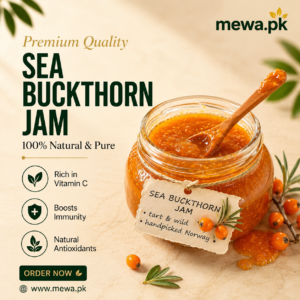
Sea Buckthorn Jam / sea Buckthorn benefits
Original price was: ₨ 2,000.₨ 1,600Current price is: ₨ 1,600.





 Home
Home  Whishlist
  Checkout
  Account